His career makes no sense as a plan. That's the point.
Matt Weingast is an Army veteran and the songwriter behind GarryOwen Lyrics. He wrote poems and lyrics during his combat deployments, then packed them away while he went to law school, built a career, and raised a family. Years later, when his mother was dying, she asked him to go back to his writing. He promised he would, and he later began working with professional musicians to turn those pages into songs.
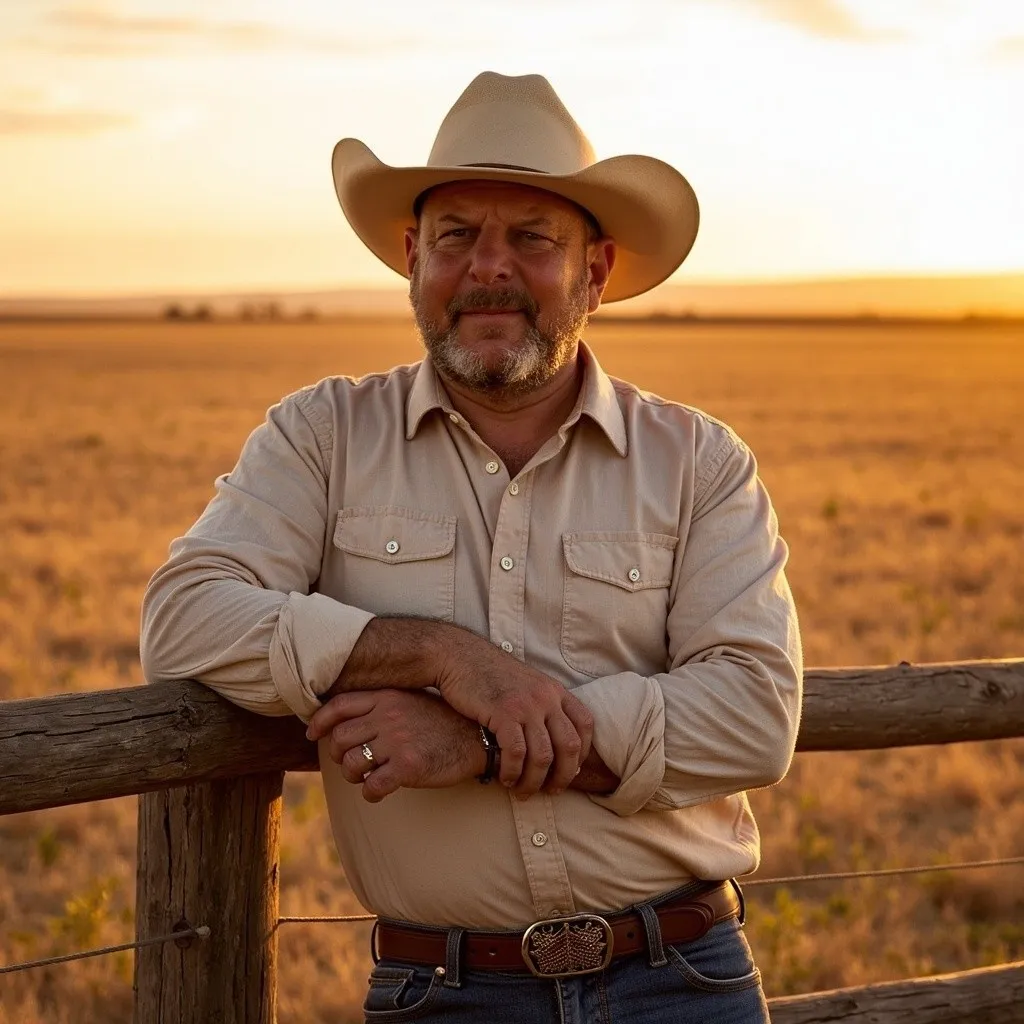
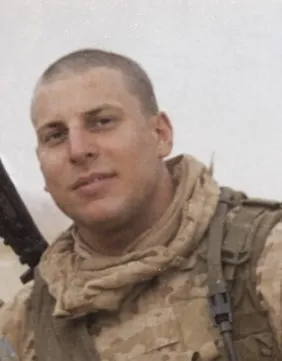
Matt Weingast is an Army veteran and the songwriter behind GarryOwen Lyrics. He started writing poems and lyrics long before the military, and he kept writing during his combat deployments, sometimes choosing a poem over a letter home so he could put down what he was actually feeling. After his first combat tour, those pages went into boxes while he went to law school, built a career, and raised a family. Years later, when his mother was dying, she asked him to go back to his writing, and he promised he would. He later opened those boxes and began working with professional musicians to turn the words into songs.
Matt answered these questions in writing. I wanted to talk to him because he is a songwriter rather than a performer, and because the path from those boxes of poems to finished songs is tied to a promise he made to his mother. The story of how he reworked “Running Home” also stood out to me.
You wrote poems during and after your deployments to process things, and they sat in boxes for years. What made you start turning them into songs?
I’d actually been writing before the military. I never really journaled. If something affected me, I’d tend to write a few lines, lyrics, a poem, or sometimes something that was almost a song in my head. I would call them poems because back then it was not easy to record things or even write music. The words I put on paper, the melody and beat stayed in my head.
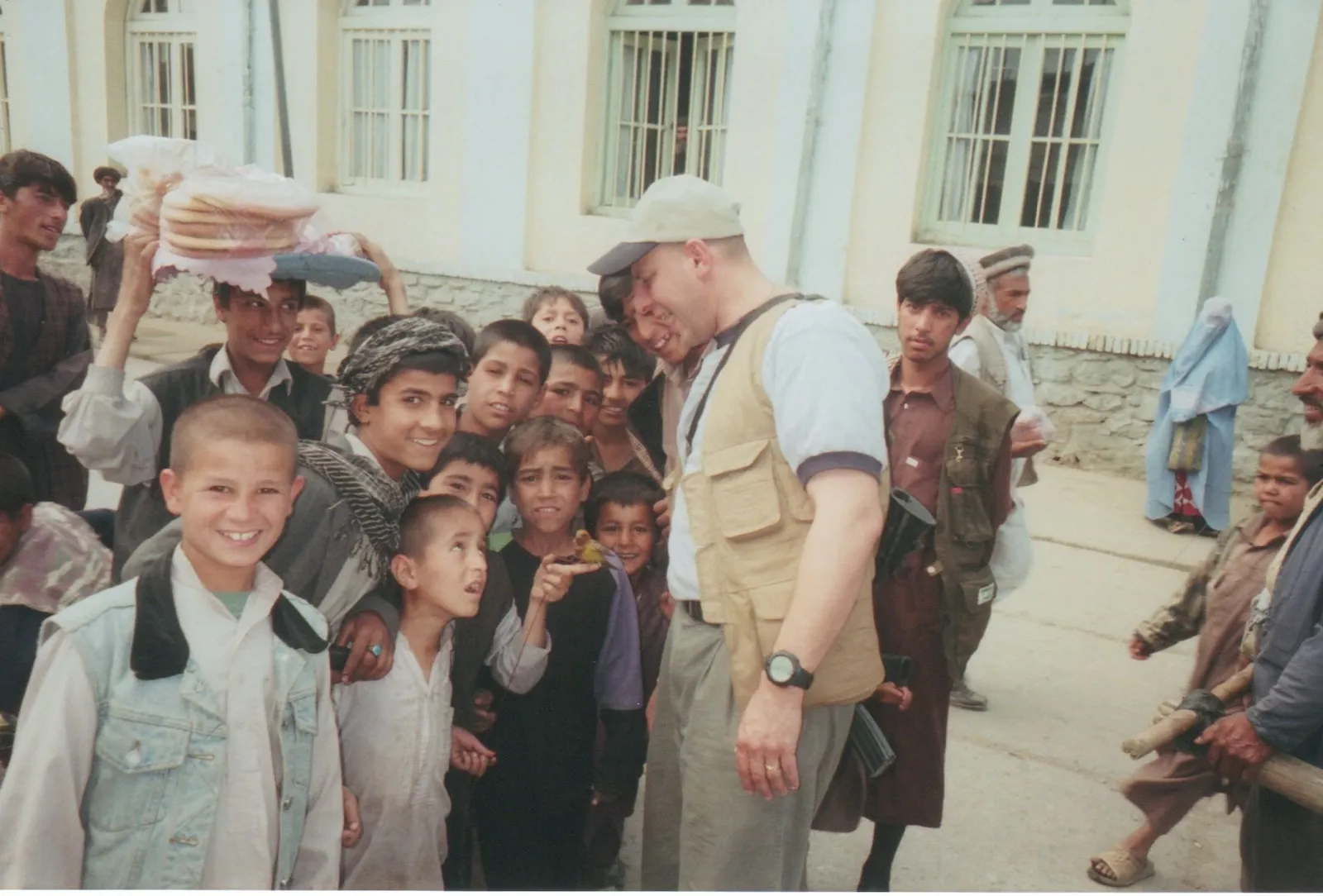
That continued during my time in the military and my combat deployments. Sometimes if I found time to myself there was a choice between writing a letter home and writing something for myself, and sometimes I’d choose the poem because in a letter home I was usually trying to reassure everybody that I was okay and everything was fine. In the poems I could write what I was actually feeling.
My writing like that kind of went in and out of my life. At times I did it often, and for other periods I didn’t write much. After my first combat tour, I pretty much put it away, literally into boxes, and figuratively too. I had a family, went to law school, built a career, and was raising kids. I kind of revisited it on my second combat deployment and continued as I found it harder to “find my way home” and during my last deployment. After that last tour, as things on the homefront had really changed and it became increasingly difficult to adjust and integrate into civilian life, I continued writing. For a while I actually thought revisiting that writing was keeping me in the past rather than helping me move forward. So I intentionally stopped writing.
The thing that eventually changed after that was my mother. She had found some of those boxes years earlier and we’d actually argued because she wanted me to take them and I told her to throw them away. Many years later, when she was dying and very sick from Parkinson’s, she called me, really to say goodbye, and said, “I hope you’ll go back to your writing.” I promised her I would.
A couple years later, I suddenly had time on my hands, something I really did not have much of in those years. So I started opening the boxes that remained, literally and figuratively. The first new song I wrote was “Good at Getting Up.”
Initially, I wasn’t trying to start a songwriting business. I think I was trying to keep a promise to my mother and understand some things about myself. I had gotten very good at avoiding and not dealing with some of the emotions and experiences of my past. That was my first objective. The “business” of songwriting came later.
You’ve said you’re a songwriter, not a performer. How does a song go from words on a page to a finished track, and who do you bring in for vocals and production?
First, I should say that I am completely self-taught and I would not consider myself musically gifted in any way. Some have said that my songwriting is “backwards,” and maybe it is. All I can do is say what I do. For me, it always starts with the story, the written words. I view myself as a storyteller perhaps even more than a songwriter. It’s just that I have found that I think I am better at writing songs than telling stories. Sometimes I also have a pretty clear idea of the rhythm, melody, genre, or emotional feel I hear in my head, and sometimes that’s much less developed.
But I learned pretty quickly that there’s a huge difference between writing a song and making a great recording. I can play a little guitar, but I’m not a professional musician, vocalist, or producer, and I don’t pretend to be.
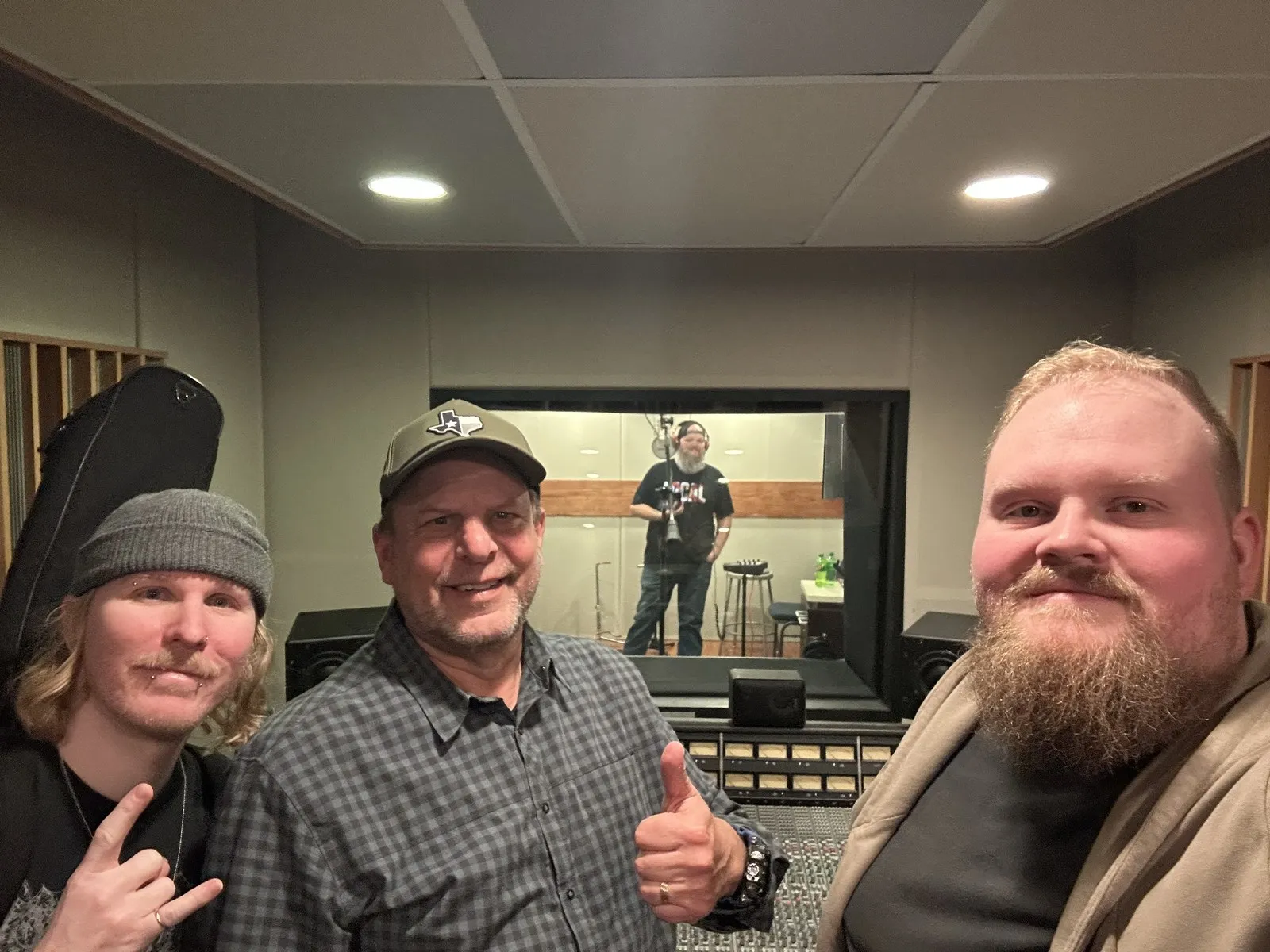
So I work with professional musicians and producers to turn the song into a finished track. I’ve been fortunate to work extensively with some really terrific musicians and vocalists. The engineers and producers at Fifty50 Studios in Dallas and Clear Track Studios in Clearwater also have helped me. What matters to me isn’t just whether somebody has a great voice or can play great instrumentals. I want them to understand the story. The emotion has to come through.
It’s collaborative. I’ll explain where the song came from, what certain lines mean to me, and what emotion I’m looking for. Then I want the musicians to bring their own talent and instincts to it. They’ll hear things I don’t hear.
That’s one of my favorite parts of the process. Something that existed only in my head, or on a piece of paper, sometimes for twenty or thirty years, suddenly comes back to me as an actual recording. That’s still pretty remarkable to me.
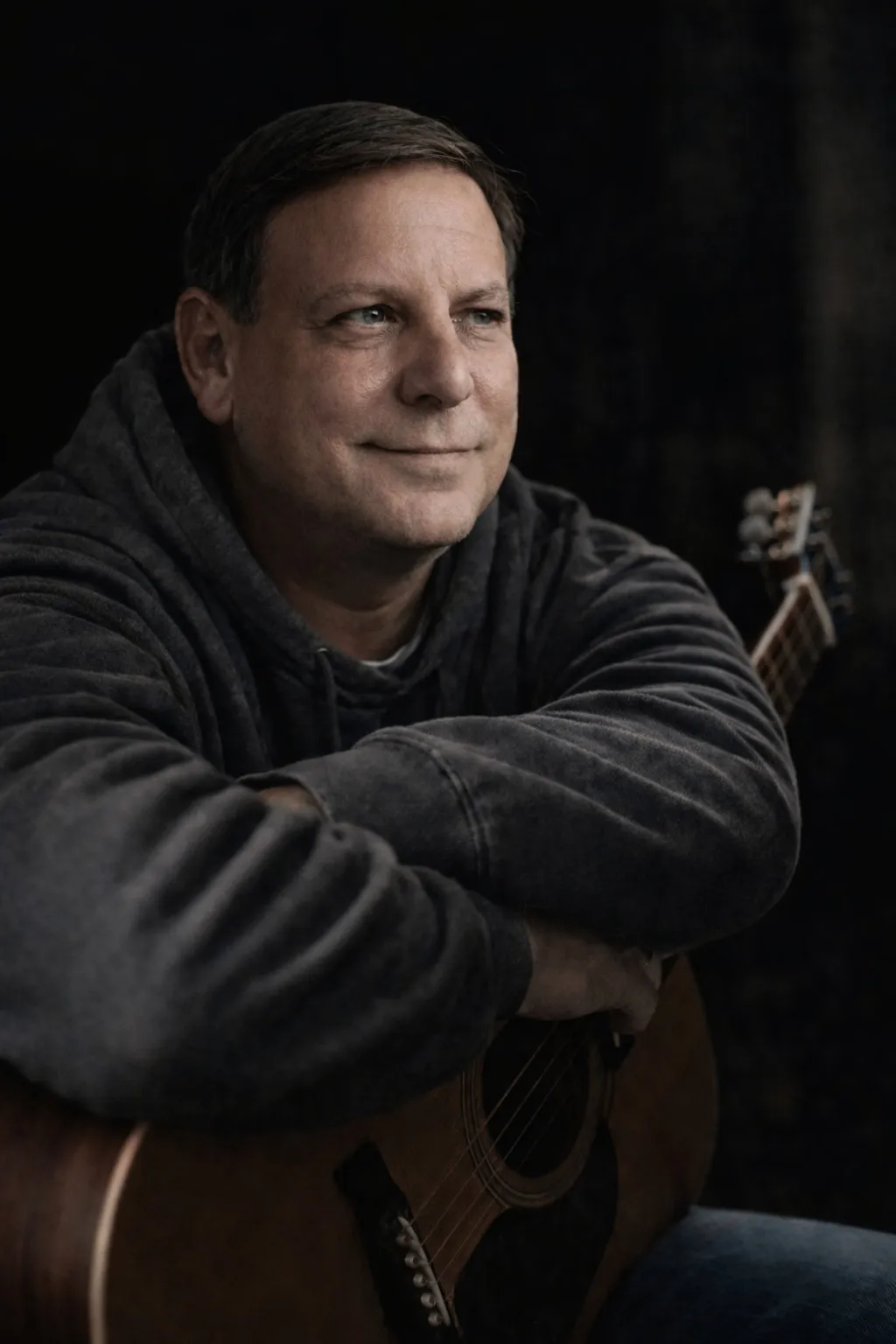
“Bonus Time” was your first Spotify release and started as a poem about close calls. How did you keep it personal but still leave room for listeners to hear their own stories?
I think that’s one of the most important things I’ve learned about songwriting.
“Bonus Time” came from several very specific experiences. Part of it came from sitting around with other soldiers in Afghanistan talking about close calls and near misses, and part of it came from having multiple instances of having been the last person (or among the last persons) who was with someone as they passed from this life. So the emotion behind it is very personal.
With that song, perhaps because it was so personal, so deeply emotional, and also impossible to capture all of the individual stories and details in one song, it kind of forced me to be more general. After all, I knew it would be impossible to write a song that required somebody to know my military biography to understand it. The broader idea is pretty universal: I’m still here. Somebody else isn’t. What am I going to do with the time I’ve been given?
Everybody has their own version of that.
So I think that is what I have learned and grown from the time I started this songwriting project to the point where I actually began releasing music. I’ve come to think that a songwriter doesn’t always have to explain the experience. Sometimes it’s better to create enough room for somebody else to feel their own experience inside the song.
Now there are times where I am even more intentionally doing that. One of my latest songs, “Still Home,” for example, is similarly very general in its appeal. “Still Home” is all about that concept we all share that home is where one’s heart is. At the same time, I still have many songs that are much more specific and perhaps more narrow in their appeal, perhaps more military and combat specific. That is still a big part of my songwriting journey, so I don’t want to say that it’s not anymore.
I am definitely getting better at understanding sync songwriting and the needs of music supervisors, but I don’t expect to change who I am as an artist. I am a storyteller, and my unique and authentic perspective is the source of my art. I don’t see myself straying far from that and trying to write songs specifically for sync.
You pitch songs to artists who might record them and to music supervisors for sync. How are those two pitches different, and what does one from you look like?
I’d first say that I am far more active in pitching my music for sync. I just have not had as many opportunities to pitch to established artists to cut my songs. I would love to do more of that, but so far I have had much more traction in the sync world.
With an artist, ultimately you’re asking: Does this feel like something this artist could authentically say and make their own?
Sync is different. You’re asking: Does this song help tell this particular story on screen?
So when I’m pitching for sync, I start with a lot of research on what opportunities in upcoming entertainment productions may have scenes for the emotions, mood, genre, and themes of my songs. Is there a strong fit to a scene, character, emotion, and lyrical theme?
The pitch itself is usually very short, and it very much depends upon who the music supervisor is and how I am pitching the music. Is it a one-to-one discussion, a group pitch session, or by way of email or DISCO link? At that point, who I am isn’t particularly important. What matters is why this particular song solves the supervisor’s problem.
So rather than saying, “Here’s my great song,” I’m trying to say, “Here’s why this might work for the story you’re trying to tell.”
That’s been a big learning curve for me.
You made a sync version of “Running Home” built around ballfields and family. What goes into reworking a song for a scene, and what do music supervisors need?
One thing I’ve learned is that a song can work beautifully on its own and still not work particularly well under a scene. Another thing I have learned, although I knew it going in, is that my music is excellent for certain specific uses, or scenes or stories, but those specific uses, scenes, or stories are a small subset of the sync opportunities.
The original version of “Running Home” was all about my view of what home has always been. The song’s lyrics were originally written after coming home from my second combat tour and as I knew I was preparing to go on my third tour. I had just recently returned to my life as a dad and a coach with young kids playing baseball and softball. I initially wrote that as my way of dealing with my journey of having to go away and always yearn to be “Running Home.” At that time, of course, as one is preparing to go back on a combat deployment, you must stay positive and upbeat. It’s hard, but people around you need you to do that, your soldiers need you to do that, and of course I needed myself to do that. So I wanted the song to be upbeat and positive. The imagery of home, family, ballfields, and the things that pull us back toward where we belong gives it visual possibilities. It’s the journey of life for an American told through my love for baseball, softball, and family. I then added to it and changed it when I came home again. And then I added and changed it when I began producing songs many years later.
Then, as I was working with musicians to produce the song, I was also learning more about sync. I knew the second verse of the song, which was important to my story, was also very specific to the story of a soldier coming home. I could not fit all my original lyrics in the final version of the song. So it became a very easy switch to make two versions of the song, as it really only swapped out a verse.
At the same time, I knew “Running Home” was rather unique in that it would resonate well with families whose kids play baseball, and particularly girls softball. I love music and I have never heard a song about girls softball, a song that says, “She’s calling pitches, spitting seeds.” So I wanted to give the song a chance to be more easily used for sync.
You run GarryOwen Lyrics as a real business and control 100% of your masters and publishing. Why set it up that way, and how has being a lawyer shaped how you run it?
I probably approached this differently because I came into music after spending decades as a business lawyer and business person.
I understood from the beginning that a song isn’t just a creative work. There are rights associated with the composition, the sound recording, performances, agreements with musicians, copyright registrations, and licensing.
So I made a deliberate decision to keep the ownership structure very clean. I use written agreements with the people I hire, register the works, maintain the metadata, and try to know exactly who owns what.
For sync in particular, that’s valuable because I can generally say, “I control the master and publishing; there’s one person to call.” In the sync world, that is called “one-stop,” and it greatly helps to tell music supervisors that your songs are “one-stop.”
Being a lawyer probably makes me more obsessive about that than the average new songwriter.
But there’s another side to it. Being a lawyer also taught me that contracts should protect relationships rather than replace them. I want the musicians I work with to understand the deal, be treated fairly, receive appropriate credit, and want to work with me again.
The legal structure should support the creative relationship, not get in its way.
As a drummer, I always notice the rhythm section first. When musicians record your songs, how much do you weigh in on the feel and groove?
Probably more than you’d expect from somebody who isn’t a performing musician, but also less than a producer or drummer would.
I tend to know how I want a song to feel. I may hear the pace, where I want something to build, where I want it to pull back, or whether it should feel heavy, restless, intimate, or driving.
But I don’t want to hire a great drummer and then pretend I know more about drums than the drummer.
That’s part of collaboration. I can say, “This needs to feel like it’s pushing forward here,” or “I want this section to create tension,” and then let the musician figure out the best way to accomplish that.
And I’ve learned that rhythm can completely change the emotional meaning of the same lyric. That’s one of the fascinating things I’ve discovered by working with musicians.
One of your songs is called “Good at Getting Up.” What have you learned about rejection and persistence since you started pitching songs?
Probably that you have to separate persistence from validation.
“Good at Getting Up” predates most of my experience pitching music, but the title has become pretty appropriate.
You hear “no” constantly in this business. More often, you hear nothing at all. And sometimes somebody loves a song and it still isn’t right for what they’re working on.
I’ve had to learn that “not right for this project” doesn’t necessarily mean “not good.”
At the same time, you can’t use persistence as an excuse not to listen. I’ve gotten criticism of songs that initially stung and later realized they were right. So getting up doesn’t mean doing exactly the same thing again.
Sometimes you get up a little smarter.
I have learned that there are lanes where my music is excellent for sync. There are many scenes, documentaries, commercials, and entertainment projects that need good sync music with the kinds of emotions that are in my songs for scenes and visuals about soldiers, combat, firefighters, EMS, SWAT, law enforcement, and many other events and circumstances.
That’s probably the lesson: keep getting up, but learn something while you’re down there. That’s a lesson I learned much earlier in life when I had to deal with failure, whether it was wrestling, on the ball fields, or leading men in small unit tactics and operations.
Again, that is where my journey is uniquely part of my voice and my stories. After all, combat soldiers learn very early that honest and critical feedback is essential to improving teamwork, and when lives are on the line you cannot miss any opportunity to get better.
Your company is named GarryOwen, after the 7th Cavalry, and it’s a Service-Disabled Veteran-Owned Small Business. How does being a veteran shape your writing and your business?
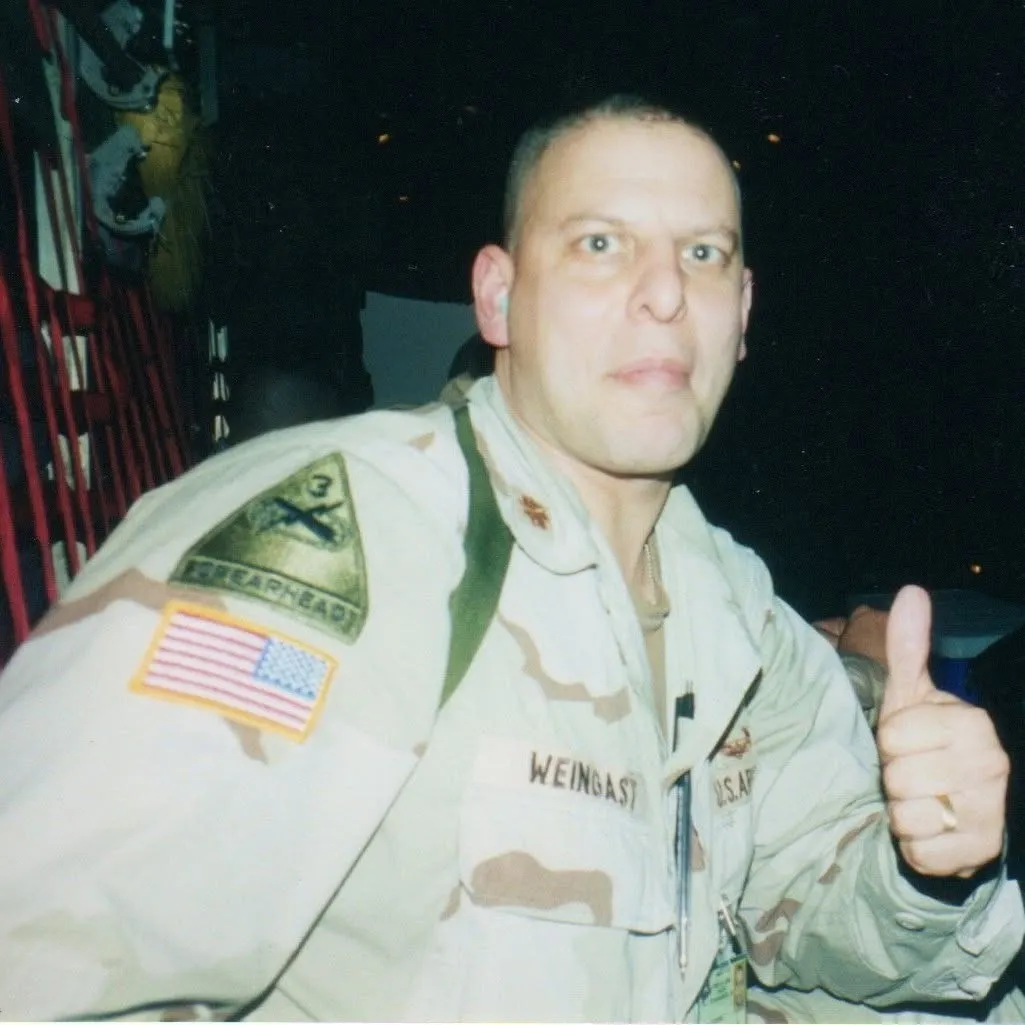
Garry Owen is the traditional tune associated with the 7th Cavalry, and I served with the 7th Cavalry during my first combat deployment. So the name has a very personal meaning for me. The lore behind the song Garry Owen, which is originally an old Gaelic song, is that the song would calm the horses (and the men) when it was played as the 7th Cavalry rode into battle. Not only do I see myself telling stories that originate from the perspective of that young cavalry soldier riding into battle, but I hope my songs can help soothe a few souls as we are all on our own journey home.
So being a veteran shapes the writing much more through perspective than subject matter. Not every song I write is about the military. In fact, many aren’t.
But those military experiences changed how I think about time, risk, loss, loyalty, love, friendship, and gratitude. Once you’ve seen certain things, you don’t completely go back to seeing the world the way you did before.
That’s why I have a song called “Once You Have Been There.” “There” doesn’t necessarily mean combat. It’s any experience that creates a before and an after in your life. For me that was combat, for others it may be something else.
On the business side, military service probably affects how I approach things too: mission, preparation, accountability, taking care of the people you’re working with.
But I don’t want GarryOwen Lyrics to be limited to “veteran music.” The experiences are mine. The emotions don’t belong only to veterans.
As I head into college, I’m pivoting from being a drummer to the business side of music. You built a songwriting business after a whole other career. What advice do you have for someone like me getting into the industry?
I’d probably start by telling you not to think of moving toward the business side as necessarily moving away from being a drummer.
The fact that you’ve actually played music gives you something that somebody who only studies the business may not have. You understand musicians. You understand what it’s like to make something with other people. You understand how to put that emotion into the song.
I’d keep that.
Then I’d learn as much as possible about the parts of the industry musicians sometimes don’t pay attention to: copyright, publishing, masters, PROs, licensing, sync, contracts, metadata, and how money actually moves.
But the biggest advice I’d give you is not to worry too much about designing the perfect career at 18.
My career makes almost no sense if you look at it as a plan. I was a soldier, leader, lawyer, entrepreneur, corporate executive, consultant, and somehow I’m sitting here talking to you about songwriting.
But almost everything I learned in those earlier chapters turns out to be useful in this one.
So I’d pursue things that genuinely interest you, get really good at something, be curious about everything around it, and don’t be afraid to change direction. As I say in “Good at Getting Up,” “it’s all about the journey, not what was won.” And, after all, it’s all “Bonus Time.”
And what you’re doing right now, interviewing people in the industry while you’re still in high school, is actually a pretty smart way to start. You’re learning how the pieces fit together and building relationships before you even get to college. You’re already way ahead of where many are when they start. Honestly, the reason I decided to do this is because I admire your vision and drive. You clearly have ambition, and you’re smart.
You don’t have to know exactly where it’s going yet. I am sure you will get there. As I told my own kids and every young person I ever coached, if you aim high, you may not end up exactly where you intended, but you will absolutely end up in a great place.
Listen to more of Matt’s music at garryowenlyrics.com and on Spotify.