Bobby Borg wanted to be in Rush. Then he had to pay rent.
Bobby Borg once practiced drums up to 14 hours a day and toured as a rock drummer. Now he teaches music business at USC. We talked about the double standard he ran into when he switched sides, coming in second at big auditions, why money habits are so hard to build at 20, and the question he thinks every young drummer has to answer: do you want to be a drummer, or a "songer" who plays for the song?
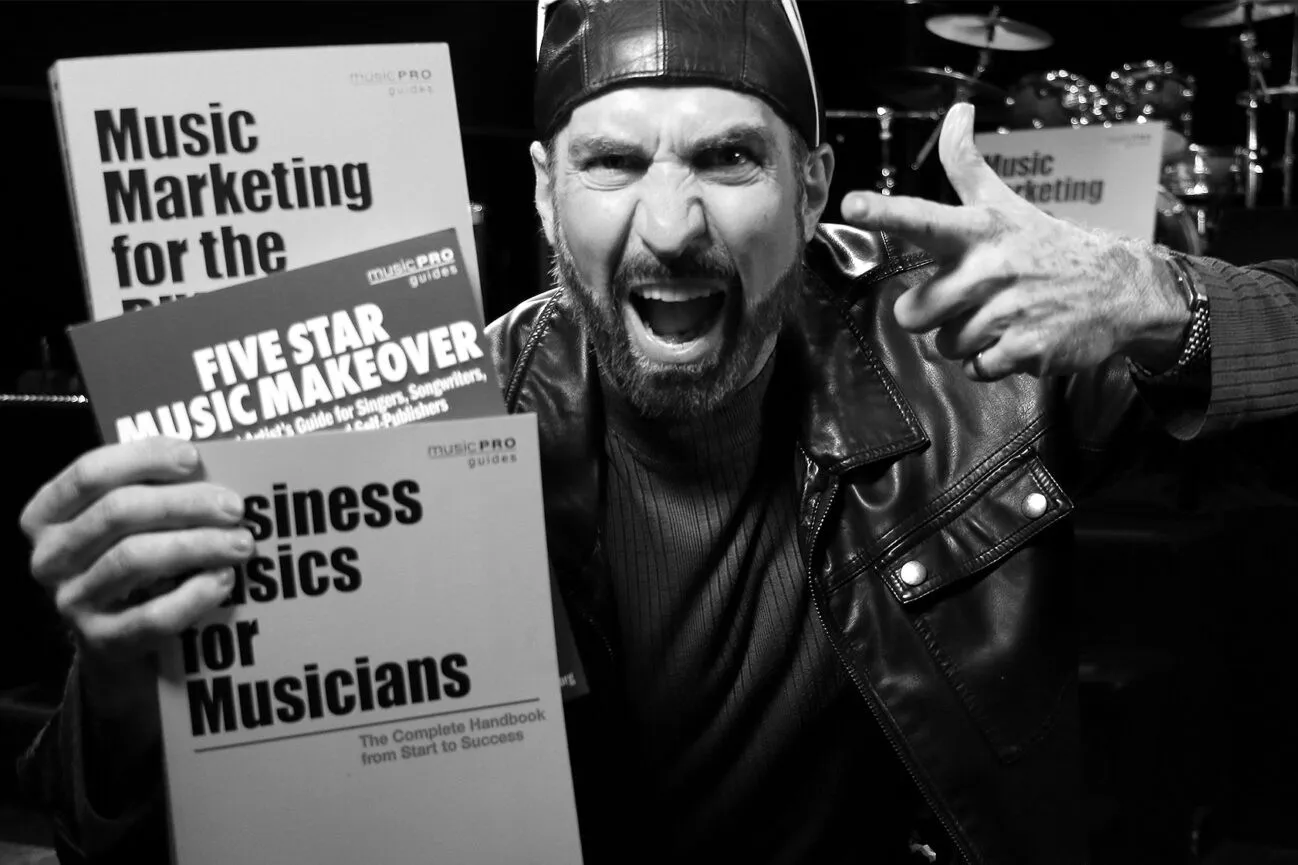
Bobby Borg is a drummer who became a music business professor. After studying at Berklee College of Music in Boston, he spent years recording and touring as a rock drummer, including a stint in the late 1990s with Warrant, the hard rock band best known for the 1990 hit “Cherry Pie” (which came out before he joined). He later moved to the business side of music, earned a master’s degree at USC, and wrote a series of plain-English books for musicians, including Music Marketing for the DIY Musician, Introduction to Music Publishing for Musicians, and Personal Finance for Musicians. Today he is an assistant professor of practice in Music Industry at USC’s Thornton School of Music and posts music business advice on his YouTube channel.
I wanted to talk to Bobby because he made the exact switch I’m thinking about. He grew up behind a drum kit and ended up on the business side of music, which is where I’m hoping to head in college. Before our Zoom call, I watched a lot of his YouTube videos, went through his website, and looked through some of his books. When the call started, his YouTube studio lights were all on. He flipped a couple of switches to turn them off and said that when the lights are on, you feel like you’ve got to perform, and now he was just chilling. That’s pretty much how the whole conversation felt.
You played drums growing up and then went into the business side of music. Looking back, what moments stand out as shaping that shift?
When I was pursuing a career as a drummer, people almost sort of respected you, because you went for it. You’re a musician, you went up against the odds, and a lot of people wouldn’t even dare go after something like that. It’s like going, “I’m going to be a professional snowboarder.” It’s a shot in the dark.
Most people go to school and college, and they just want to get out and, at 23, immediately have the $90,000 or $100,000 or $120,000 job. Now they’re getting their own cars and their own apartments and going on their own trips, and they feel like an adult. And here you are, someone who takes all these massive risks, and in some cases you’re sleeping on your friends’ floors. So in one respect, people respect you for that. But on the other end, there’s also a little bit of, “You’re kind of weird. We’re all over here going on vacations and getting married, and you’re that weird, crazy guy who went for his dreams.”
Then when you cross over into the business side, it’s almost like you’re respected for that, but at the same time, now you’re not as cool anymore. You’re not as current anymore. You’re not as much of an insider anymore, because you’re not one of the weird ones out there on the stage and in the studios playing. It’s almost like this double standard.
Here’s the bigger picture. People always like to frame you in their mind in a way that’s comfortable to them. You have to be really careful in life not to let other people’s opinions influence you, because what people are normally doing is projecting. They’re projecting their own insecurities on you.
I was in two very diverse situations. On one end, I was the crazy musician going for his goal. On the other end, I’m now more of a business consultant and educator. And I noticed how those projections completely flipped. It was like night and day. It just makes you realize to never let other people dictate what it is you do, because normally they’re not being honest with you. They’re just projecting their own fears on you.
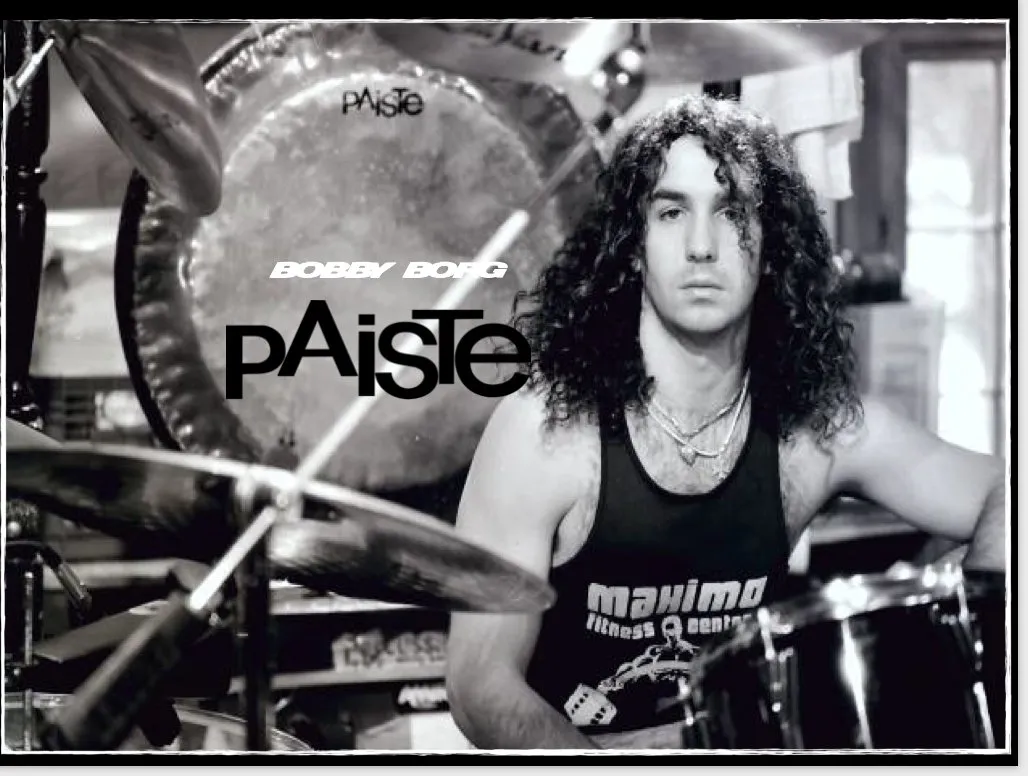
In your video about failing at music, you talk about coming in second at big auditions for The Storm, Cher, and Barbara Mandrell, until you realized you were chasing stadium-level gigs without stadium-level experience and started building your own bands. How can a young musician tell when it’s time to stop waiting to get picked and start building their own thing?
Good question. That video at first sounds like a negative video, but then it ends up being a positive one, because the lesson is: don’t be afraid to fail.
I think it’s when you get fed up and you get to a point where you’re like, “I am so convinced I want to do this. I’m so convinced I’m good enough to do this. I’m so convinced that I’m putting in the time and the effort to earn it. But for some weird reason, I am not getting it. What the heck is going on here?” I’m getting accepted into the door, but then in the final decision, I’m not getting it. That basically means I have what it takes, but there’s one small thing that’s missing.
So what I did is I searched for that one small thing, and I found an answer that made sense to me. At that point I said, “Okay, let’s change that. Let’s go in and fix that problem.”
The important thing is to always be looking for answers, and to always be willing to blame yourself, not other people or the circumstances. Some people could easily go, “Something’s wrong with the world. Something’s wrong with the system. Something’s wrong with people. Maybe I’m being discriminated against. Maybe life isn’t fair.” I never did that. I was just like, “All right, this is awesome. I’m getting in on some huge auditions. Why am I not getting them?” So I looked in the mirror and said, “Let’s analyze this.” I found something that made sense, and that’s when I decided to go off and do my own thing.
That one hits close to home. I audition for drum corps (competitive marching ensembles that tour all summer), and I’m hoping to march World Class, the top division, this year. I’m also applying to colleges right now, and USC is the goal because of its music industry program.
Those are huge. Those people take it seriously. You’ve got to be really good to get accepted into a really good corps, so the fact that you even get the auditions is pretty cool. Look at that as a success.
And USC has the music industry program, and they have the, well, I don’t know if you want to call it drum corps, but they have the big marching band. Shoot for it, man. And you know what, along the lines of your question: if for some reason you don’t get in, shoot for it again. You could always transfer in. I’ve seen people come in on their third year. There’s nothing wrong with that.
In one of your videos, you tell a story about stuffing envelopes for fans with the interns at Atlantic Records, until someone from the label asked what you were doing there, since you were the artist. I grew up playing drums and I’m thinking about going into the business side. What kind of edge does thinking like a musician give you?
Well, think about it. We’re in the music business, right? When you’re in the music business and you understand both sides, it gives you a little bit of an edge, because not only are you adept in business, you’re also adept in understanding music, and you understand what it is that you’re selling, ultimately. You understand the mindset of the musician. You understand what it is to be passionate, what it is to have a desire to connect with people, and what it is to make art. But at the same time, you also understand the principles of business, which a lot of artists don’t understand.
We could actually flip the question and ask it about musicians: what edge would you have if you understood the business? When you’re a musician, you put a lot of heart into it and you don’t put enough mind into it. It sounds really cool when musicians make it and they didn’t put any mind into it, because then they can say, “I just did what I wanted to do. I went out there and I believed in myself. I didn’t make music for other people. I made music for myself.” That sounds all cool. But do you know how many millions of musicians are like that and are broke, or working at McDonald’s or something?
So I think you should understand the basic business of business. A balance of both can be really beneficial, because it’s not all spreadsheets. It’s great that you think something could sell and you think an artist could be famous, but it would also be good if you understood why.
We used to call them the suits. The suits versus the rockers, the musicians versus the suits. And we used to make jokes that the suits probably couldn’t hit a middle C on a piano if you pointed at it. I don’t think that’s good. I think you should understand music a little bit. If you understand both sides, you’ll be more well-rounded in how you connect with musicians. You’ll be able to go into a studio, and the musicians aren’t going to be talking behind your back, because they know you know your stuff.
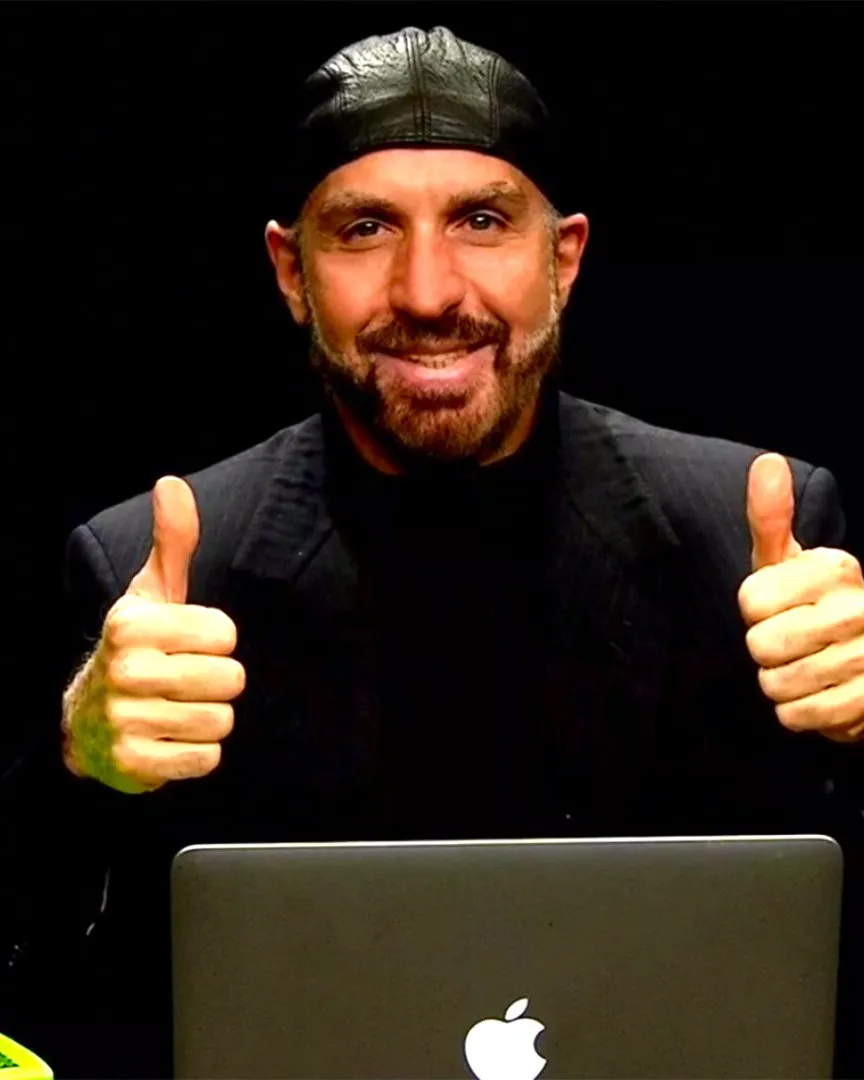
In Personal Finance for Musicians, you point out that high schools don’t really teach personal finance. Drum corps is pay-to-play (members pay to march), so I know I can’t make a living doing it. What money habits should someone my age start building now, so I can afford to take bigger risks later?
One of the problems when it comes to personal finance and starting early is the way the human mind works, if you study developmental psychology. When somebody is young, and I say this respectfully, there are certain parts of your brain that haven’t developed yet. You’re not thinking 100% about consequences.
So a lot of times, young people just want to be ballers, man. The bigger car they can show all their friends they have, the bigger house, the bigger vacations, the bigger watch, being at the Super Bowl, and they take all the pictures for Instagram. Usually, until a later age, it doesn’t click.
Somebody is going to really have to have it together to go, “You know, at age 20, I’m going to start putting money away in an index fund and let it grow, so by the time I’m 50, I can be a tri-millionaire or something.” They’re not thinking about that, because when you’re 20, 50 sounds like a dinosaur. You never think of yourself as being retired. And when you think of retired, you think of some old guy in goofy pants playing golf.
You almost have to take yourself outside of yourself to get the mindset to even do it. Maybe that means using your parents, or your uncle, or other people who have been successful, and going, “I’m going to start doing that now.” In other words, you’re more influenced by older people than by younger people.
One of the reasons I did a lot of the things I did is because my number one influence was my dad, and my drum teacher. These were 50- and 60-year-old people. I was not influenced by my friends. I was influenced by my uncles: “Wow, look how successful he is. Look how much respect he gets. What did he do? This is what he did. That’s what I’m going to do,” at age 12.
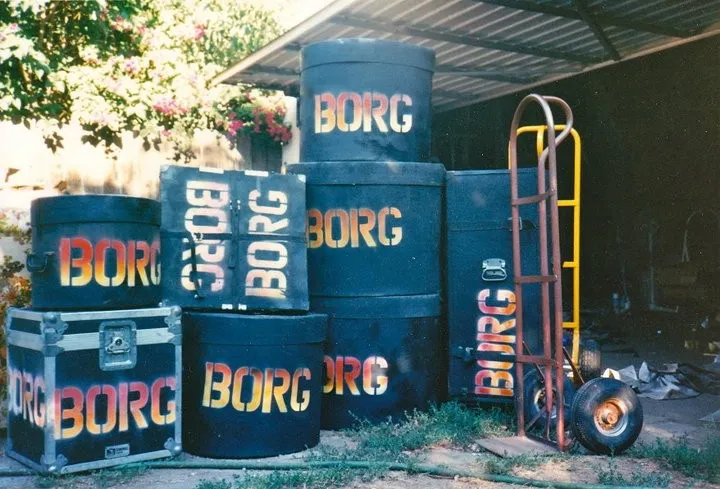
Since we’re both drummers, I had to ask this one. You watch someone doing all this crazy stuff with the sticks, but the really impressive players are the ones who stay perfectly in the pocket, locked into a steady groove. How does that connect to the way drummers can approach the music business?
First of all, I want to commend you on your questions, because I thought I was going to get stuff like, “Who are your influences? When did you start?” What you’re saying is worth money, man.
The problem is that you’re asking an adult question, and it’s almost like you can’t accept it when you’re young, because you’re not thinking like an adult yet. What young kid doesn’t want to be back there flashing off, doing the fast drum solos and impressing everybody? Every young kid wants to do that. It’s not until you get a little older and more mature that you realize a lot of times it’s about having a pocket, being solid, and playing for the song. Because at the end of the day, we’re not selling drum solos. We’re selling songs. So you have to play for the song, ultimately. That’s really the answer to the question: you start thinking more like a business person when you get older, and you start thinking about what you shouldn’t play more than what you can play.
But now I’m going to completely destroy that answer with a recent interview I just saw with Stewart Copeland, the drummer for The Police. He’s an amazing drummer, and he gave the most amazing answer. He said there’s this idea that drummers are supposed to play for the song, and he goes, basically, “No. Songwriters play for the song. I’m a drummer. I play for the drummers.” He loves playing drums. He likes intricate rhythms, cool fills, technique, chops. So the problem he had with Sting, the lead singer, was that Sting wanted him to play for the song, and he wanted to play for the drummers. He’d throw in some crazy, complicated fills, and Sting would turn around, look at him, and go, “Why are you doing that?” They had a constant battle of playing for the song versus playing for the drums. Ultimately they kind of met in the middle, and that’s what his style is and what you hear on the records. But he said that, ultimately, he wanted to be a drummer.
So what’s interesting, to answer your question, is: do you want to be a drummer? Or do you want to be the member of a successful band that makes millions of dollars, because you’re more concerned with the business of selling songs? Or do you want to be a session guy who goes in and helps other people create hit albums, because you know how to play for the song? Are you a songer instead of a drummer?
Personally, if you want to make a living, you should probably be a songer. Because if you’re a drummer, basically, here are the people who listen to songs, and here are the people who listen to drums. It’s a smaller market. It’s not that you couldn’t be successful as a drummer. You could teach, you could write drum books, you could be a drum hero and all that kind of stuff. But here’s the problem with me: I wanted to be a drummer in a drummer band. I wanted to be in Tool. I wanted to be in Led Zeppelin. I wanted to be in Rush. And the problem is, most bands aren’t Rush. Most bands aren’t Tool.
So basically, what happens is you take a drummer who’s used to going [sings a busy fill], and you put him in a situation where now he has to go [sings a simple beat] in order to pay rent, you might have some problems. I’m not going to lie: I trained more to be a drummer. When I got involved in some of the groups I played in, it was all pocket, feel, simplicity, and I really had to try to find that. Also, I like to play songs fast. So when they were all of a sudden like, “No, the feel is like [sings a slow, steady groove],” I’m like, “What is that? Let’s put some edge on it.”
So there you go, man. That’s another million-dollar question right there. You kind of have to decide: do you want to be a drummer, or do you want to be a songer? I didn’t want to be a songer. I wanted to be a drummer. And when I finally realized I had to be a songer, I was almost depressed. I almost wanted to quit. But then I said, “You know what? Every job sucks a little bit.” If you’re a lawyer, you’ve got to deal with different clients. If you’re a doctor, you have to deal with the administration and all the headaches of the hospitals and laws and stuff. So I figured I might as well do something I love and deal with some of the nonsense, rather than be an accountant and deal with nonsense.
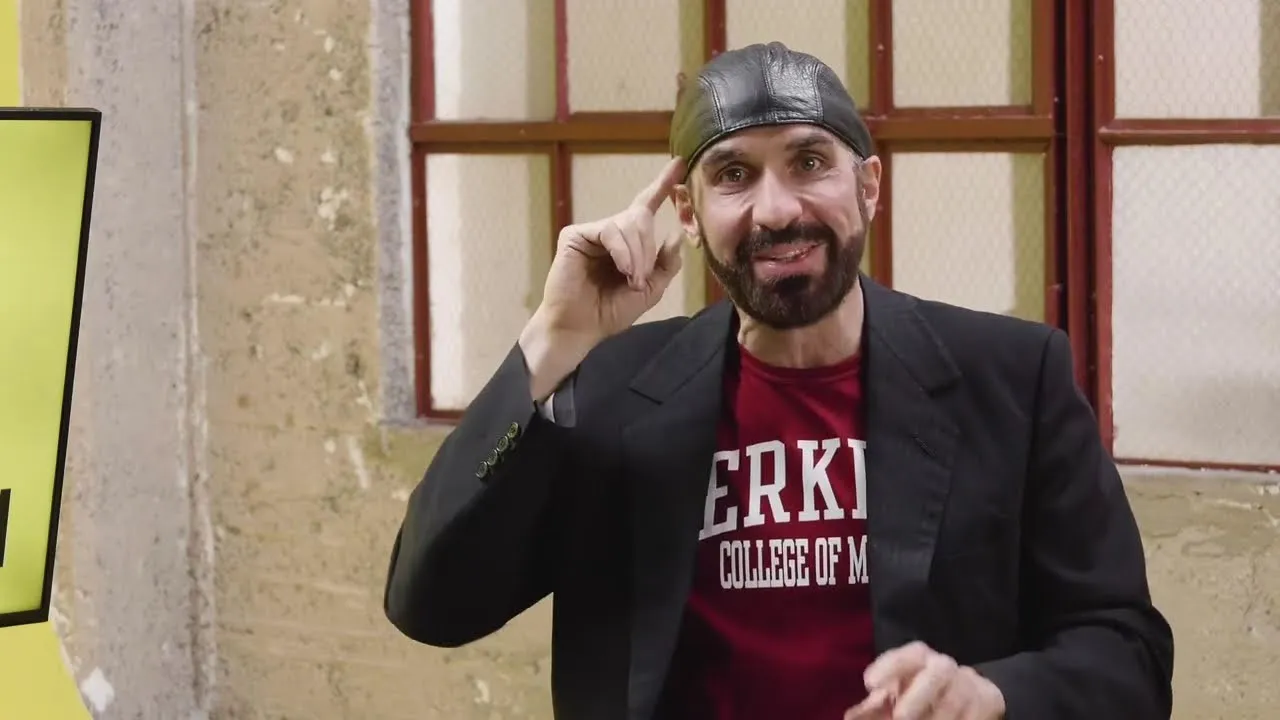
By then we were past the time Bobby had to dial out, but before we hung up, he added a closing note of his own.
When you’re younger, there’s just so much you’re going through. You’re going through growing pains, identity crises, trying to find your independence, trying to prove to people that you can succeed.
This is going to sound like a total old-fart answer, but if you really could latch onto some mentors, your parents included, and really trust that, “Look, they’re 20 or 30 years ahead of me. They must have done something right, because they’re still on the face of this earth. They’re not in jail. They’re not in any trouble. So maybe I should listen to them.” Sometimes, for young folks, listening to an older mentor is not a bad idea.
I thanked him and said I hoped he’d found the questions interesting. He had one more thing to say.
On that note, real quick: you should really think about your strengths, and maybe use your blog and your questions as a potential career move. In other words, maybe you have a knack for being an innovator, for starting your own business, for being creative. Because most high school kids just don’t start a blog and start reaching out to people to interview them.
When I said I hoped I’d see him again, maybe at USC, I told him that based on this interview, I’d imagine it would be a pretty fun class.
Find Bobby’s books and consulting at bobbyborg.com, and watch his weekly music business videos on YouTube at @bobbyborg.