Lukas Janecek: from a Czech church to Grammy-winning sessions
When Lukas Janecek was 16, a visiting pastor at his church in the Czech Republic told him he'd end up playing guitar in America. He didn't own a guitar and didn't believe it. About ten years later he's a Grammy-winning guitarist in LA, and the road there went through Berklee, a community college in East Hollywood, and USC.
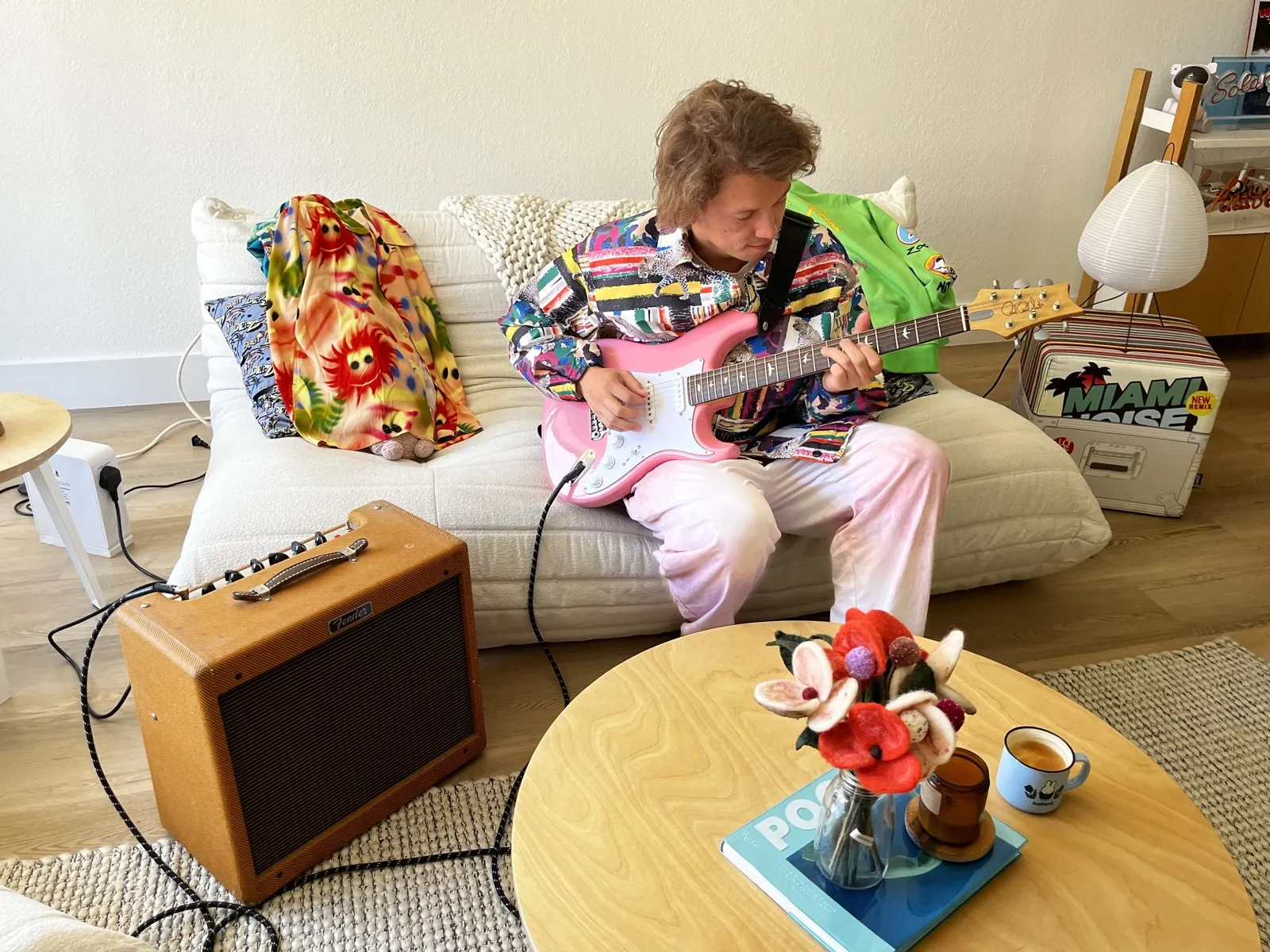
Lukas Janecek is a Grammy-winning guitarist in Los Angeles, originally from the Czech Republic. He didn’t pick up a guitar until he was 16 or 17, which is late, and he taught himself almost entirely off YouTube because, as he puts it, the kind of players he wanted to learn from were hard to find where he grew up.
Since then he’s gone to Berklee in Boston, then a community college in East Hollywood, then USC Thornton. On paper the community college part looks like a step backward. He’ll tell you it was one of the best things that happened to him.
We talked about all of that, and about his faith, which comes up a lot, and about a teacher back home who told him it was already too late. English is Lukas’s second language and I’ve kept his phrasing where I could, because it’s his.
Let’s start at the beginning. How did you get into music?
The way I got into music at all and started playing guitar was, I would say, supernatural for me. I grew up in a church in the Czech Republic. We’ve always been a Christian family, so we were always going to church. And I started kind of late, in my late teens. I was 16, 17.
This pastor from San Diego came to our church. I don’t know why he came, but he did. And he basically prophesied over me. That he sees me playing guitar, that I’ll be in the USA, and that I’ll be kind of successful in it. And at that moment I was like, yeah, whatever. I didn’t believe it. I always listened to music, like everyone, music’s all around us. But I never thought about playing an instrument.
Then two, three weeks after that, I was at my cousin’s place. He always played guitar, he had it as a hobby. He put on “Hey Joe” by Jimi Hendrix on YouTube, and when I took the guitar into my hands, for my ears at that moment, it was like, okay, I got it. Basically the same day I ordered my first electric guitar. I remember I practiced for three months without even having an amp. Seriously, 12 hours, even more, every single day, locked in my bedroom. That was the start of my whole music life.
Not many people know that part of your story.
No, not many people know that. I don’t usually talk about it because it’s a little bit longer story. I always just say it’s God’s way. But when I look back now, whatever we have prepared for us in our lives, God’s way is better. Even if we don’t think so at that moment.
How was the transition from church music to mainstream recording?
When I started playing the guitar it was mostly, of course, church, learning that type of stuff. But I also really liked blues, the most. Listening to Jimi Hendrix, Stevie Ray Vaughan, Eric Clapton. I remember that because those are really important parts of my life. And then one day on YouTube I saw John Mayer on the recommended page. That’s how I got to the mainstream pop, R&B stuff.
So even though I grew up in church, learning from church musicians, having that as my foundation, I still on my own developed the other kinds of music I was interested in at the same time. I would say that part was pretty easy for me.
What was harder is that the music scene in the Czech Republic is not really that good. If you’re honest, it’s just not really as great musicians as in the United States. Even though you can learn everything on YouTube, even back then, ten years ago, you need to be surrounded by musicians and play with them in real life. That was kind of harder for me to get there. It’s really hard to find mainstream, pop, R&B musicians who are really good in Czech.
So the way you play now is mostly self-taught.
Yes, definitely. For sure.
And there’s also this thing from when I was 17, kind of older than most people are when they start an instrument. I wouldn’t say it’s sad for me, but I remember this day. In Czech, in Europe, there are elementary art schools for music that you can enroll in while you’re going to high school or elementary school. I went there and they were kind of full, and the teacher told me really bad things. That I’m old, that it would be better if I’d never even started, that I will never achieve anything.
I remember it still very vividly. I sat on the stairs and I was like, I’m not gonna cry. I’m gonna go and show him what I can do.
I definitely wanted to have an education and a coach or a teacher before going to the US. But that never happened. So it was mostly myself, self-taught, just researching things and learning on my own.
How did you first get to the U.S.?
I came to the United States for the first time one or two years after I started playing. So I was 17 or 18, really young. I went for one summer, stayed two or two and a half months, and went to music workshops. I even went to Bethel in Redding, California. We had a summer camp there and I played.
Then I went back, and I was like, I need to go to college in the United States. When I absorbed the atmosphere and the musicians, I was like, that’s the place for me to be. And I felt like God wants me to be there too. So I got back to Europe, stayed almost one more year, and got ready for college here.
I came on my own. My grandparents were freaking out. My parents didn’t believe in it at first either. But then I must say my mom moved heaven and earth to support me and my vision. And I had faith in it. I felt that was what God wanted me to do.
You’re a person of faith, and mainstream recording is a very different world. Has that been difficult?
I wouldn’t say it affected me, because I think I’ve been pretty lucky to meet really good people in the business. To be honest, of course I’ve met people who are doing things that might not necessarily be the true way of God, I would say. But I think I have good social skills, so with anyone I’ve met I’ve been able to deal with it pretty easy. I never had anything that would cause conflict.
And honestly, there are people I’ve met who don’t believe in God who are really nice. Even without faith, they still look at some people like, oh man, what you’re doing is kind of too much. Of course you meet them, you hear it, it’s on the news, it’s everywhere. Some people are like that. But when you have faith in God, it’s been easy for me.
What have been your favorite sessions or gigs?
I wouldn’t say I have one that was really memorable. It’s more like, how to put this. It’s more the little things. Like with my friends at Berklee in Boston, when we were there at 2, 3, 4 a.m. and they brought some great Chinese food and we recorded. For me personally, those little moments had a bigger impact on me, through the kind of people I’ve been with, than meeting some big name.
Recording with friends I love is no better than recording with Bruno Mars, or I don’t know who. It’s about how you feel and what kind of people you have around you. That’s what it’s all about, I would say.
You went to Berklee, then LACC, then USC. That’s an unusual path. What did each place give you?
I went all around, honestly, as one of the few people. I don’t mean it in a wrong way, I’m just saying how it was, but the friendships I made at Berklee were more long-lasting and deeper than at USC.
But the stuff I learned at USC was on a more complex and challenging level than Berklee. Berklee is still, I would say, the best music school in the world. But they kind of let you do your own thing and help you with that, give you advice. USC is more like, they don’t care, they push you to do things you wouldn’t necessarily want to do. Especially as a guitar player, like reading music and stuff. That pushes you in different kinds of ways that you would normally not explore on your own. So it challenges you more and teaches you a little bit more.
After Berklee I went to LACC, community college in Los Angeles, because it had been really hard with scholarships and everything. People usually do one school and stay there. I had different complications.
That’s a big change. How did you handle the doubt?
I don’t want to put it down in any way, but of course everyone knows community college, 100% acceptance rate, versus the best school in the world. It’s been a big change, naturally.
But thanks God, the music department and the teachers at LACC are actually excellent. When you Google it, it comes up pretty high, even above some private schools. When I was making that life-changing decision I was praying about it, looking at schools I’d need to go to in LA or San Francisco or around, and I was like, yeah, it’ll be LACC in East Hollywood.
I got there and the teachers were awesome. It honestly helped me grow more than I would ever expect. I’m super grateful for that. I believe it was the right choice from God that I needed to make at that moment.
Because you do believe in God, but you’re still going from the best school in the world to community college in LA. As a human it can be scary. You know God, but you still hope. You have to trust Him. And it seriously helped me grow so much. I have true friendships from there, I met some great, great people.
What are your future plans?
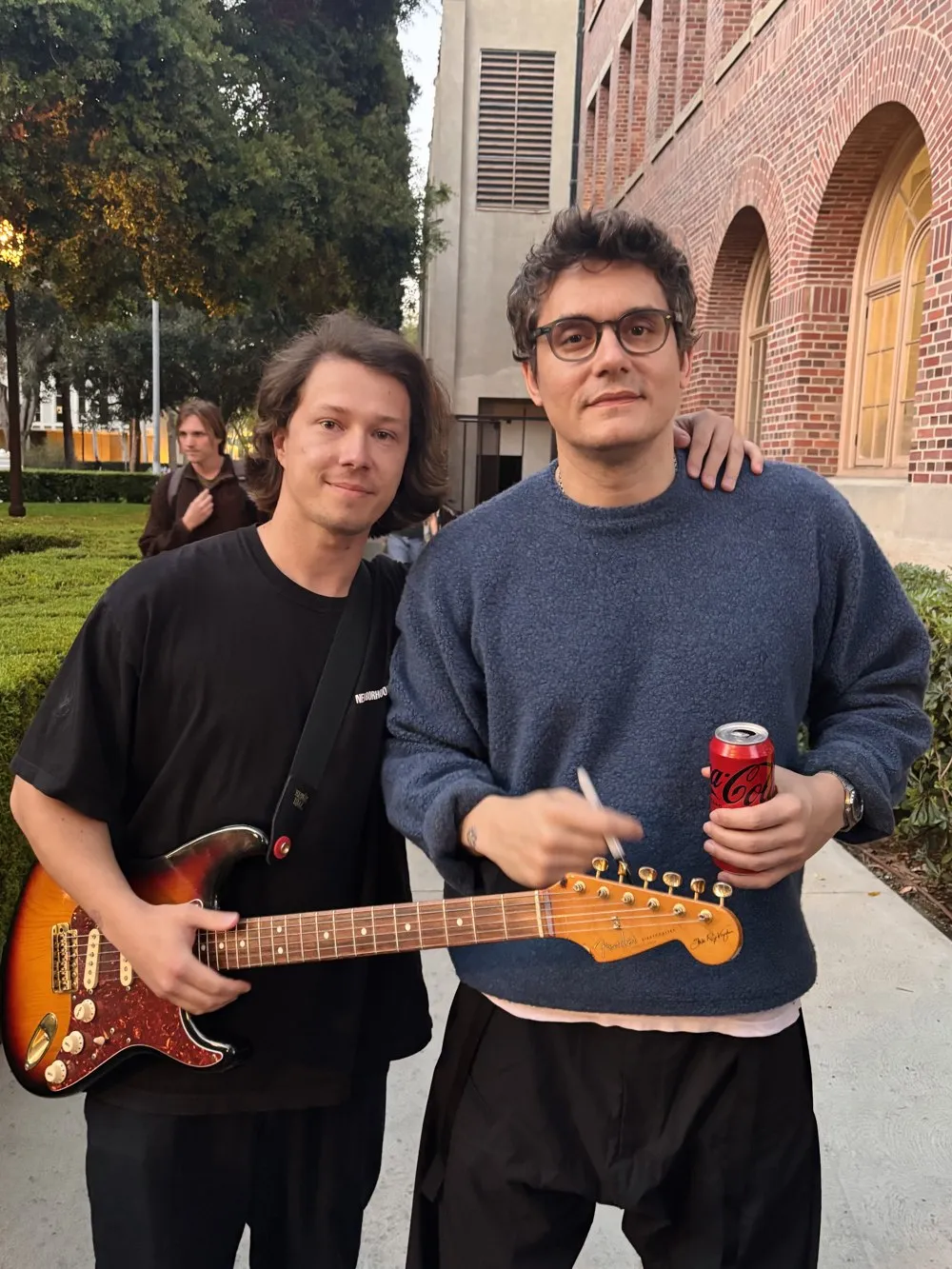
I would really want to get on some really big world tour with Bruno Mars or John Mayer, really big artists I look up to and who inspired me. I think that would be my biggest desire.
Except that, just doing sessions with the best of the best in the music industry, and growing on my instrument. And also probably trying to write my own stuff. Everybody knows I’m the worst singer ever, so it’s kind of hard. I’d need to do some kind of instrumental stuff, which is cool too. Solo guitar, with either a trio or my own band. Something original.
But definitely the focus as of right now is the big world tour. Personally, and I think every musician in general, you get more joy when you play live in front of everyone. There’s the energy in the presence. So that’s something I would really try to get on.
Last one. What’s your advice for aspiring musicians trying to follow a path like yours?
I would say be yourself, work hard, and never let anyone put you down or tell you that you can’t do anything. Because you can do everything you put your mind to.
That’s why I want to put the message out. As I said, with the teacher when I was picking up the guitar. He didn’t say those words, but it sounded like, it would be better if you never started. That really hits hard, and many people would maybe turn down and stop doing it. But if I can go from this small country in Europe that almost no one knows about, come to the United States, and play with the biggest stars in the industry, then you can do anything too.
You can do anything you put your mind to, if you work hard and you believe in yourself. And you never quit. You can’t quit. Just keep going.