Paris Catura: the Chicago drummer who keeps showing up
Paris Catura grew up in the Bay Area and moved to Chicago in 2021 without knowing anyone. Five years later he's gigging around the city and about to start a fully funded master's at NIU, and he still goes to three jam sessions a week. We talked about how he actually got on the scene, the mindset that keeps him going, and the one skill he didn't see coming.
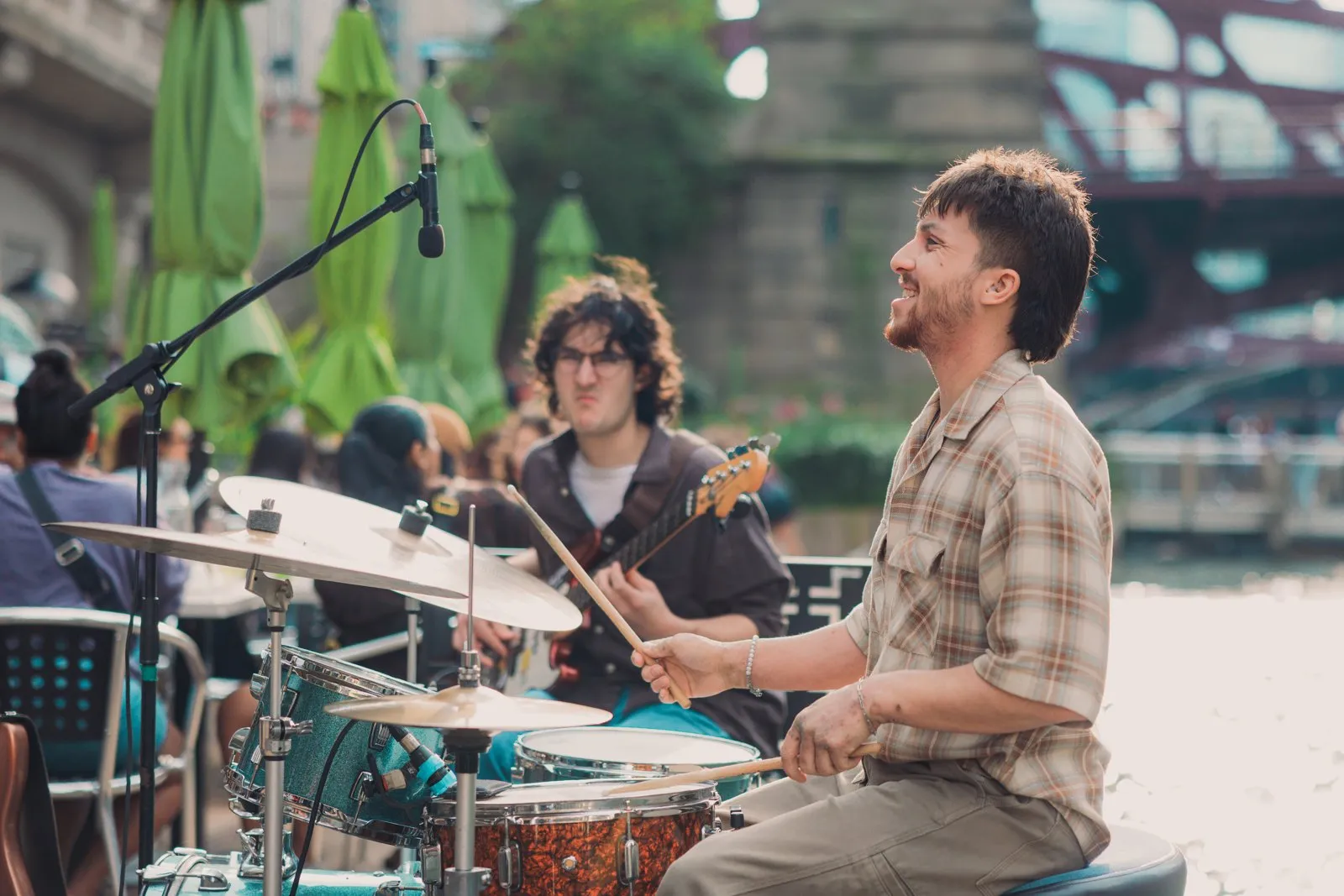
Paris Catura is a jazz drummer in Chicago. He was born in San Jose, grew up in Pleasanton, and moved out to Chicago in 2021 for college without knowing a single person there. Jazz is his main thing, but he also plays R&B, neo-soul, funk and salsa, and as a Filipino American he’s brought that side of himself into his music too, including a Filipino jazz-fusion group called the Philharmonic. This fall he starts a fully funded master’s at Northern Illinois University.
I wanted to talk to Paris because there’s no big break in his story. He got where he is by going to jam sessions, three a week, for years, and by introducing himself to people after shows. He’ll also tell you straight up that he hasn’t “made it” and isn’t sure that feeling ever really shows up. So this is a conversation about the part of a music career that nobody posts about, and how he keeps his head right while doing it.
He apologized for rambling at the end. He wasn’t rambling. I’ve cut some filler but mostly left him alone.
Did you have any gigs or rehearsals today?
Today I didn’t have anything, I was mostly just running errands. But yesterday I had a gig at this place called Fulton Street Collective. It’s an independently owned space, basically in a warehouse, and they have smaller groups showcase younger artists in Chicago to the public. And they have an artist there who actually paints or draws the band while they’re performing. That’s their spin on the whole live performance thing. I was subbing in, but it was a super cool hang. Pretty much all jazz standards.
What was it like going from the Bay Area scene to Chicago?
So I moved from Pleasanton to Chicago back in 2021 for college. I didn’t know anybody when I first moved here, so I was just kind of coming in on a blank slate. Just kind of risking it, you know. And funny enough, since it was during the pandemic, kind of when things were starting to come back, everybody was applying to every school, all the big names. So I actually had trouble getting into some of my safe schools because so many people were auditioning. I was trying to go to LA at first. I had a connection with someone on the faculty at Long Beach, but there were so many returning seniors and juniors that there was one spot open, so I had like a 0.01% chance of getting in. But Columbia College Chicago gave me a good opportunity, so I took it.
The culture is different here, but to be completely honest, I love it. People here are very real with you. They’re friendly, they got that Midwestern charm. Of course I love my Bay Area people, those are my homies, that’s my home for real. But I adapted pretty quick.
And from the music perspective, man, there’s just so much going on in Chicago. There’s a big punk rock scene, a huge indie scene, a huge kind of experimental scene, the jazz scene is really big. When I first got here I just got thrown into all of it. People were like, you gotta come to this show, you gotta see this, you gotta come support this. Have you heard of this, have you heard of that. In the Bay Area I felt like there honestly wasn’t as much going on, at least in terms of what I was hearing about. So it was almost like a culture shock, because I didn’t expect that much from Chicago. But people are proud here, man. Especially in the music scenes.
You’re about to start a fully funded master’s at NIU. What made you choose it?
The jazz program at this school is very highly, what’s a good word, respected. The teachers there are big names, people who’ve played with many great jazz musicians. And the program itself focuses on making sure the people who come through have a specific goal in mind that they want to work on, so the faculty can help you reach that goal. They make sure you’re actually learning your history and doing things for the right reasons. That you’re not just doing it because you’re doing it. You’re doing it because you love it, you know? I have high respect for those guys.
And another thing is I got a full ride. So that was another big reason. I’m basically going to be a TA, but for the graduate students, so it’s a graduate assistantship. Tuition’s paid for, I get a stipend, ten hours a week, and I get my master’s in two years. I’m very excited, dude.
You always had the chops. How did school actually refine you?
Man, I definitely gotta give kudos to my drum professor at Columbia, Charles Heath. He was a huge influence on me, and actually on the business aspect. Not only was he helping me keep my chops up and making sure I was learning the right history and material to execute what I’m hearing in my head, but he would actually sit down with us and talk business. Like, if you want to get out and play gigs, you gotta do this, you gotta do that. Marketing. Making sure you’re respectful toward all the people you’re potentially going to get hired by. Presenting yourself well, all that kind of stuff. And that’s something I feel like you don’t get that much from mentors or teachers. They do the classes, they do your private lessons, and it’s very surface level. But he actually helped me with some of the business aspects that not many people talk about. That reshaped what I thought about the music industry and how to actually get around in the performing scene in Chicago.
Because the whole thing about Chicago is it’s all connections, you know. Having those connections is a big part of the business, and making a good name for yourself is huge.
So how do you actually get out on the scene? What was getting your first gigs like?
It’s funny that we’re talking about that, because somebody else just asked me about it too. Like, what did you do when you were first trying to get out on the scene? And I was like, man, I still feel like I’m working on getting out on the scene. It’s never like, I’ve made it, you know what I mean? I feel like I’m always on the search, like alright, what can I do next to get a gig.
But when I was starting out I was obviously pretty hard on myself. I was like, I’m not getting anything. But then I realized it was kind of a mindset thing too. You have to believe that you’re on this path, and that even though you can’t see what the future holds, you’re still able to get there. You gotta trust the path you’re on. So I just kept reaching out to people. And what I’d do is go to jam sessions a lot. I actually still go about three times a week, three different jams. That’s a huge marketing thing for yourself. You go out there, you get to play, people hear you, and then you start meeting people and they’re like, hey man, I’d love to play with you, I got this gig coming up on Saturday, you want to play on it? And I’m like, there we go. Or even going to shows. I’d go to shows and just meet people, like, hey, I’m a drummer, I loved you guys’ set, here’s my Instagram, if you ever need a sub or want to jam, let me know. Getting those first couple gigs definitely motivated me. Summer of 2025, when I first got out of college, I was like, alright, it’s time to just go to the jams. And ever since then I’ve been very consistent with it.
So it’s less about luck and more about consistency and work ethic?
Yeah, exactly, man. My belief is truly, if you believe you’re able to get where you want to go, then you’ll get there. If there’s ever a doubt in your mind, you’re not gonna make it. You have to truly believe that what you’re doing is what you love and that you can get where you want to go.
I feel like I have to preach that, because your mind is such a powerful thing. I know this is kind of going into psychological territory, but your mind really is such a powerful thing to get you through the hard times, get you through the sad times. And keep you humble too, you know? So I try to make sure I have a healthy mindset about my playing. If I go to a jam and I’m like, shoot, I didn’t play well, that was bad, and I keep thinking about that, I’m gonna be thinking about it all the time, to the point where I don’t see my growth and I don’t see all the opportunities I’ve been given. Of course there’s always a luck aspect to everything. But half the battle, if not most of the battle, is the mindset and the willpower.
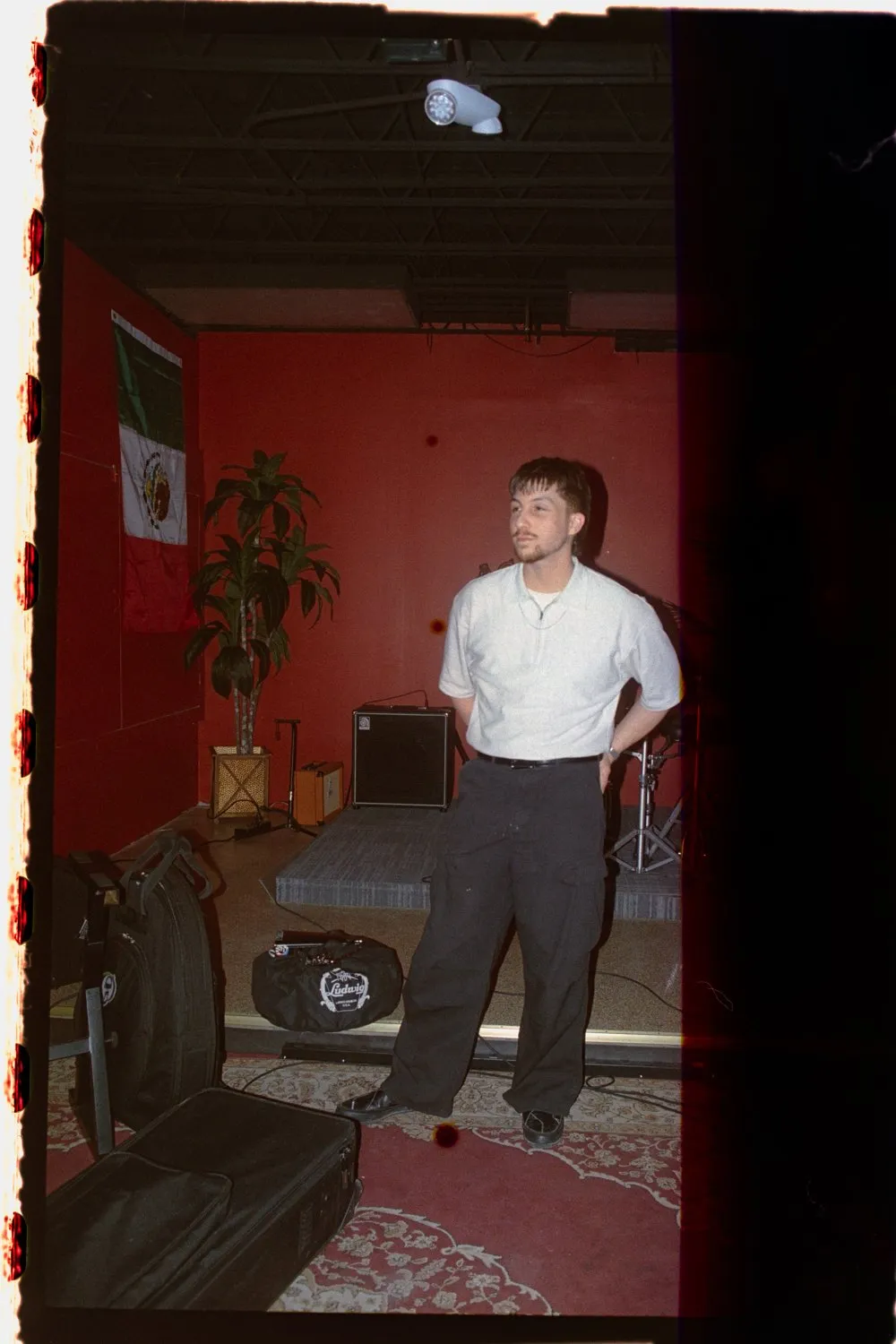
Your work takes a lot of energy. How do you handle the days when you don’t have it? Do you force yourself out, or rest until you’re in the right headspace?
Sometimes, if I don’t feel like going to the jam, I’ll just force myself to go, and then I’ll realize I had such a great time. Or somebody showed up and I was like, shit, I got to play with this person. But then there’s other times where you can’t overdo it. I’ve had to hold myself back from the FOMO, like, damn, what if this, what if that. Sometimes you just gotta take a break for yourself and let your mind and body heal from whatever it is. Being sick, or you just went through some heavy stuff, or something that’s hard on your mind or body. You need to take that for yourself.
I’ve been struggling a lot with that, actually. I have a skin condition called topical steroid withdrawal. I grew up with eczema, but if you use steroid creams for too long your body gets dependent on them, and if you get off them you go through withdrawal symptoms. That’s what I went through a couple years ago, and I’ve been recovering for like two years. Your whole body goes up into an eczema flare, and then you’re actually on a different spectrum than normal eczema, where your body doesn’t produce the enzyme it got dependent on from the steroid.
So a big thing for me was trying to stay happy, motivated, and basically just sane, while trying to be in the music industry, which is all about being outside. Trying to get over how I looked and everything, my body looking kind of messed up. That’s kind of why I preach the mental health thing a little heavier. I know how hard it is to deal with anxiety and the stress of certain things. Sometimes you get to a point where you just gotta make sure your choices are in your best interest, and not for anyone else. Because if you’re not doing something that makes you happy, you shouldn’t be doing it. That’s a twisted long way to say you should do what you want to do. You should push yourself, but never push yourself over the edge, you know?
Has pushing over the edge ever cost you on a gig?
Yeah, I’ve had multiple instances of that. Where I’ve pushed myself too much to the point where I’m shaking after a gig, purely from lack of energy. Not eating before a gig because you want to make sure you’re all good for it. Or practicing so much to make sure the music is perfect that you forget to eat, forget to shower, whatever. I’ve had a couple instances where I lacked sleep because I wanted everything to be good for the next gig. I’ve run on multiple gigs with only one or two hours of sleep, and that’s not good, because you get behind the drum set and you’re like, holy shit, I’m tired. I don’t even know if I’ll be able to play what I want to play, because my body doesn’t have the rest it needed.
It’s intense, bro. But it’s a learning process too. I tend to sleep in because I have late nights, so my sleep schedule is all messed up. Trying to navigate that whole thing is a whole other thing.
What’s the skill you least expected you’d need to grow?
The ability to say no. That’s such a huge thing that I didn’t realize doing a bunch of stuff kind of trains you to do. Because you want to do every gig you get. You’re like, I just need exposure, I’ll do anything to get a gig. And it’s not so much that you get to a point where you’re like, I don’t need to do a no-paying gig. Of course I still do no-paying gigs, because it’s people I love to play with and it’s for the music, not for money. But it’s being able to say no to things because you know you need to rest, or it’s something you don’t want to do, or something that doesn’t feel right to you, or it’s not something you feel confident doing. Being able to say no is a huge thing I’ve been learning over these past two years.
In terms of other musical growth, I think just going out and listening to people has been huge for me. Finding the Chicago greats who’ve been seasoned in the scene for a long time and being able to talk to them as individuals, as people, rather than like a celebrity or something. Because everybody deep down is just a person. And I’ll go listen to someone and be like, wow, they played that over this song, what they did right there was super cool, I’m gonna try stealing that, or I’m gonna ask where that came from. Or it doesn’t even have to be that deep. It could just be, wow, I gotta figure out how they made that groove feel so good. Listening to people who sound good and make the music feel really good, and trying to emulate that and learn where they got it from, that’s really helped my growth.
Your family’s been a big part of this. How so?
My parents have been there for everything. They’re one of the first people I go to whenever I’ve got some deep stuff I need to talk about. Same thing with my skin, the whole TSW thing, they’ve been there for me through all of that.
And in terms of music, they’ve been so supportive ever since I was getting ready for college. They were like, if you really want to do this, if you know you love music, we’ll support you all the way. If that means you’re thousands of miles away, we’ll help you with that too. Of course they didn’t want me to move halfway across the country, but they were nice enough to let me do that, I guess you could say.
My mom’s a vocalist. She calls herself a “retired vocalist,” quote unquote, but how can you be retired if you sing all the time, you know? My dad plays sax and I’ve gigged with him. He’s silent but supportive. One of those dads who’s more reserved, but you can tell he really cares about me. He’s always checking up on me. Hey, how’d that gig go? You got anything coming up this week? You making enough money? He’s doing the parent thing, but it’s all out of love. Just such a loving family. And if I ever stray away, they help me get back on the right path.
What’s a gig that stands out?
I kind of have two answers for this.
The first one that comes to mind, in the middle of May I spent a weekend in Detroit playing with a jazz quartet, with people who are some of my favorite musicians to play with. Getting the call for that gig, I was like, oh my God, this is my big break. I just felt so honored to play with these guys. They’re older than me, like 26 to 28, but they’re like big brothers. Funny enough, some of them went to NIU. I see them at the jams all the time and they’re really doing the thing, being real jazz musicians, playing with some heavy hitters.
It was a whole weekend of music. The night we got there, Friday, we immediately went to a gig at a hotel downtown and played jazz for like two hours. Went home, woke up the next day, had a rehearsal, did that same hotel gig again that night, and then the next night was the big one. Dude, it was just flow mode. The saxophone player does shows in the park near his hometown every month in the summer, and this one was a John Coltrane tribute. Coltrane’s music is very intense, very high energy, very hard theory-wise too, and the emotion behind it is very deep. It has a very deep root in Black American music. Trying to honor that is not an easy feat. So being asked to do that gig and emulate Elvin Jones, Coltrane’s drummer, it was such an honor. That was one of those times where you don’t get much sleep but you’re playing all day and having so much fun the entire time. And even though it wasn’t a big gig, like playing in front of a bunch of people, it was still one of my favorites, because it was full of people who were there because they love John Coltrane’s music. It was just in the park, a bunch of older folks and some younger families who wanted to listen to some great music. I just had such a great time playing with those guys.
The other gig, funny enough, was with the same two guys. We played at Navy Pier and opened for the great Marquis Hill, and a bunch of other really great names. Bobby Broom, Leonard Simpson, Kassa Overall, and one of the great jazz legends of Chicago, Ari Brown. He’s one of the few still left from the generation that played back in the 60s. And we played with this great tap dancer, Jumaane Taylor. I know when you hear tap dancing you don’t think jazz, but he’s a great jazz tap dancer. It was such a surreal moment, because I’m playing with all these guys I love to play with and opening for such a big name. I was just like, whoa.
So it was two ends of the spectrum. That gig in the park was fulfilling emotionally and musically, and this one was fulfilling because I’m opening for people who are really doing the thing, you know? Those two gigs were definitely big in terms of fulfillment in my musical journey so far. That’s my long answer.
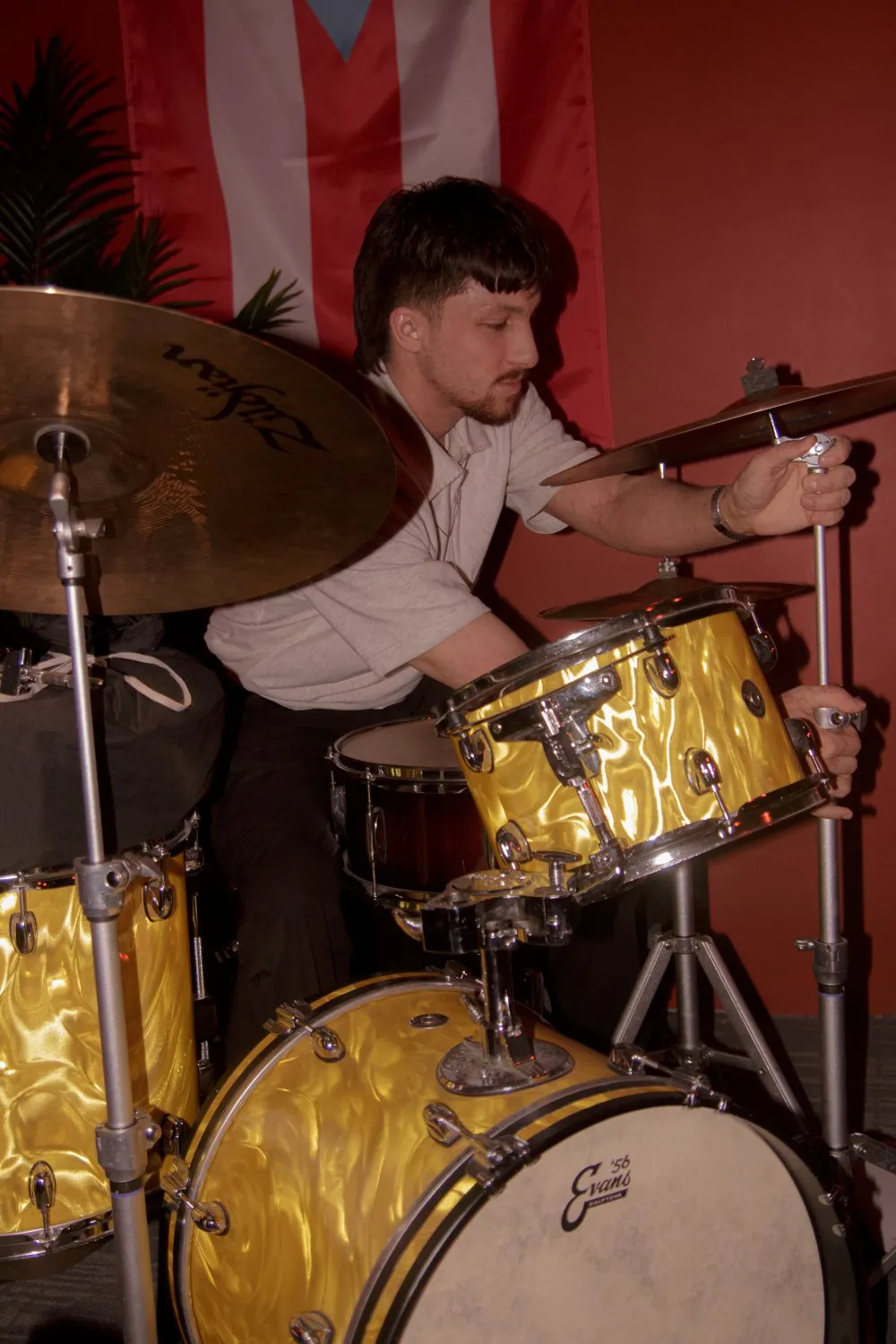
Any plans for the future, and any advice for younger drummers coming up?
Obviously the future’s unknown, but I’m just kind of going with the flow, seeing how school takes me and what I can learn from that. And in terms of gigs, just do the thing, man. Keep pushing. Keep reaching for more. Keep making sure that what you’re doing is what you want to do, and that you’re doing it for the right reasons. Honoring the history, the music, the space. I’m gonna keep going to jams at least three times a week, even if I have a full-time job or I start teaching or whatever. I’m still gonna make sure I get out to the scene, because that’s what you gotta do. If I make it big or whatever, I’m still going to those sessions, because it’s about paying it forward too. Once you get to a certain point, you’re not better than anyone else. You started at the same spot everyone else is starting at. You gotta pay your dues, as they say.
Any advice I’d give young drummers coming up? Just keep going, man. Train your mind and train your body. There’s two sides of the coin. Train your body for the physical part, the performing, the chops, whatever it is. But train your mind to love the ability to learn, and to have respect for everyone around you, especially yourself. And pay it forward. That’s all I can say. Never stop believing.